El Bufadero, Gran Canaria: How to Photograph the La Garita Blowhole at Sunrise
El Bufadero de La Garita is one of the most dramatic places to photograph the sunrise in Gran Canaria, and one of the easiest to reach. It is a natural blowhole on the east coast of the island, in Telde, where the Atlantic forces its way through the volcanic rock and bursts out in clouds of spray. Add the first light of the day coming straight out of the sea, and you have a scene that changes with every single wave.
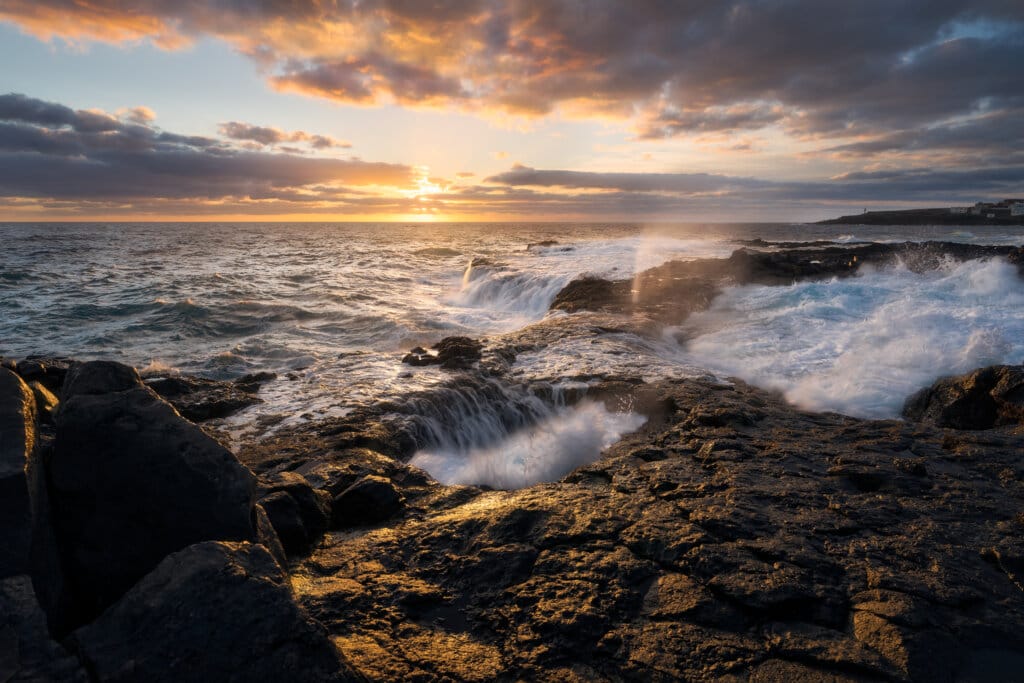
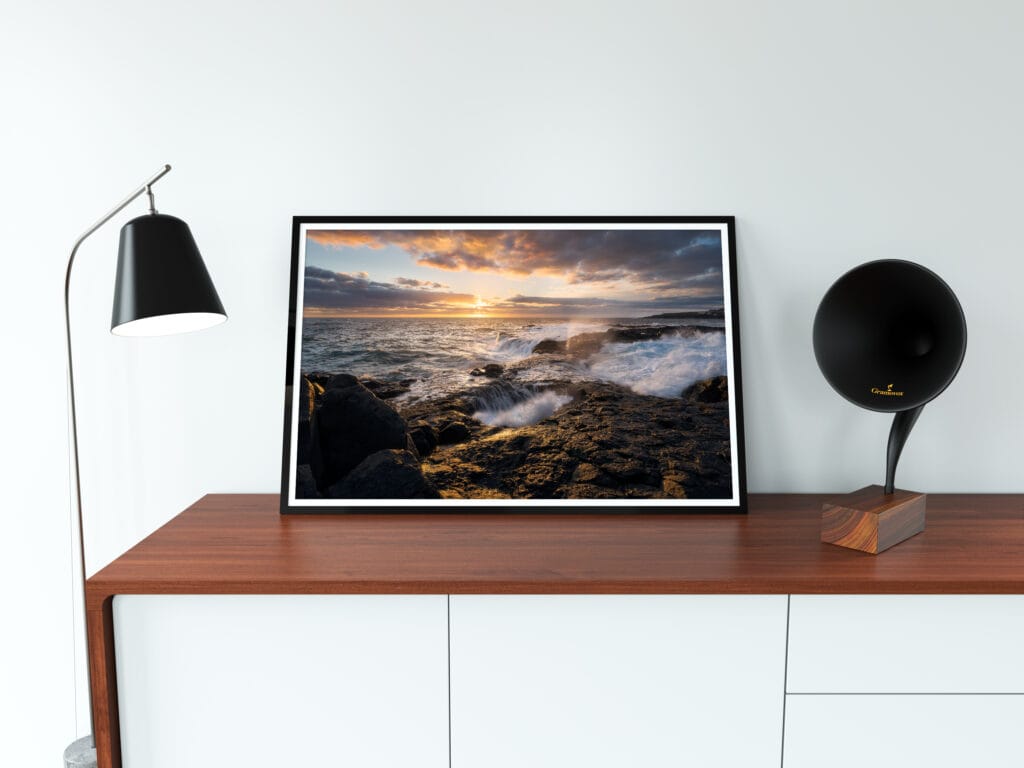
It is also where I made “El Bufadero”, one of my personal favourite photographs of the island. In this guide I share everything you need to photograph it: where it is, how to get there, when to go, which settings to use and how to stay safe on the rocks.
What is El Bufadero?
A bufadero is the Canarian name for a blowhole: a sea cave with an opening in its roof. When a wave rushes into the cave it seals the entrance, and the trapped air and water have only one way out, straight up through the hole, with a loud snort (that is where the name comes from: bufar means to snort). Volcanic coasts like Gran Canaria’s are full of these formations, but La Garita’s is one of the most accessible on the island.
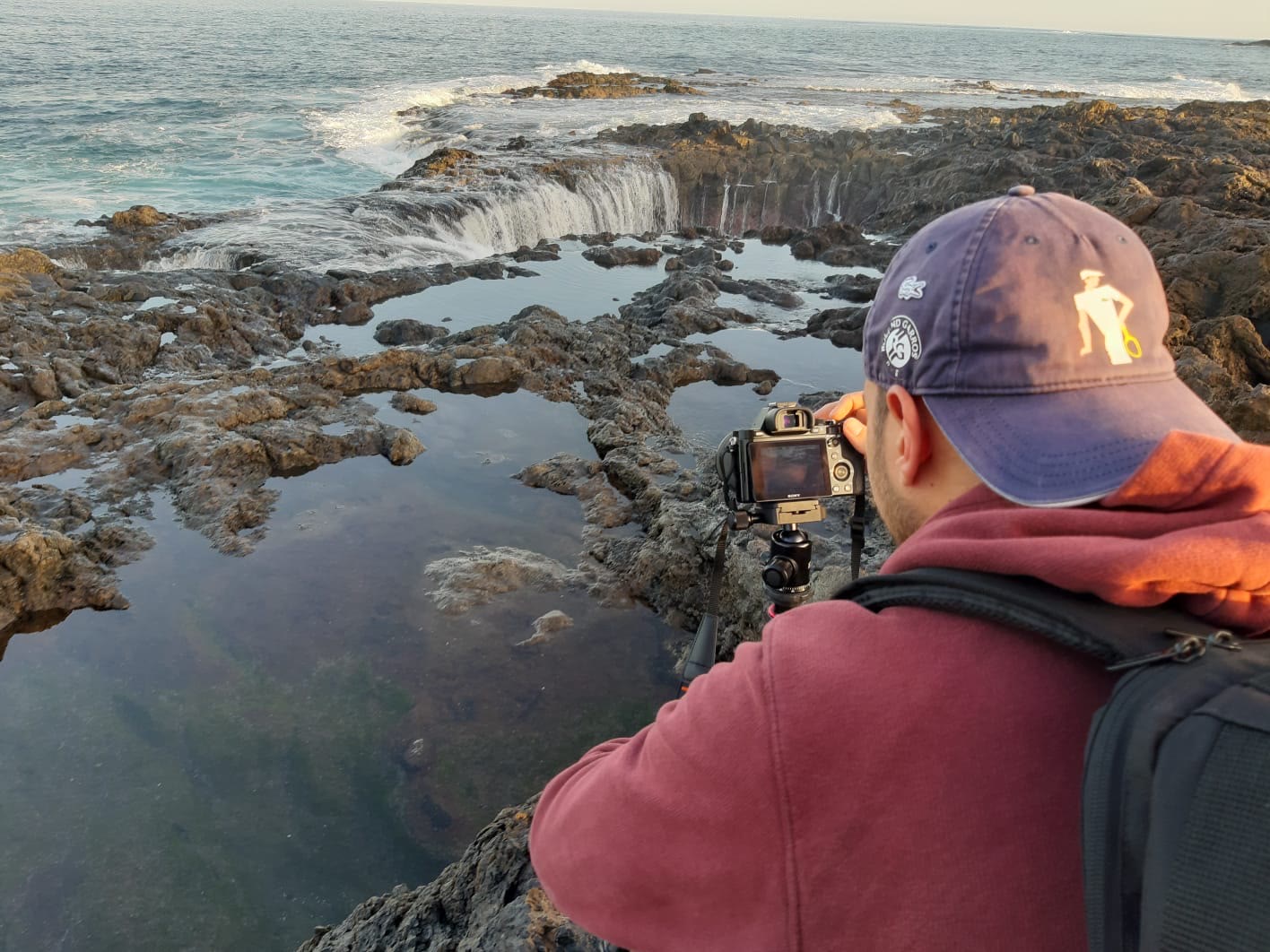
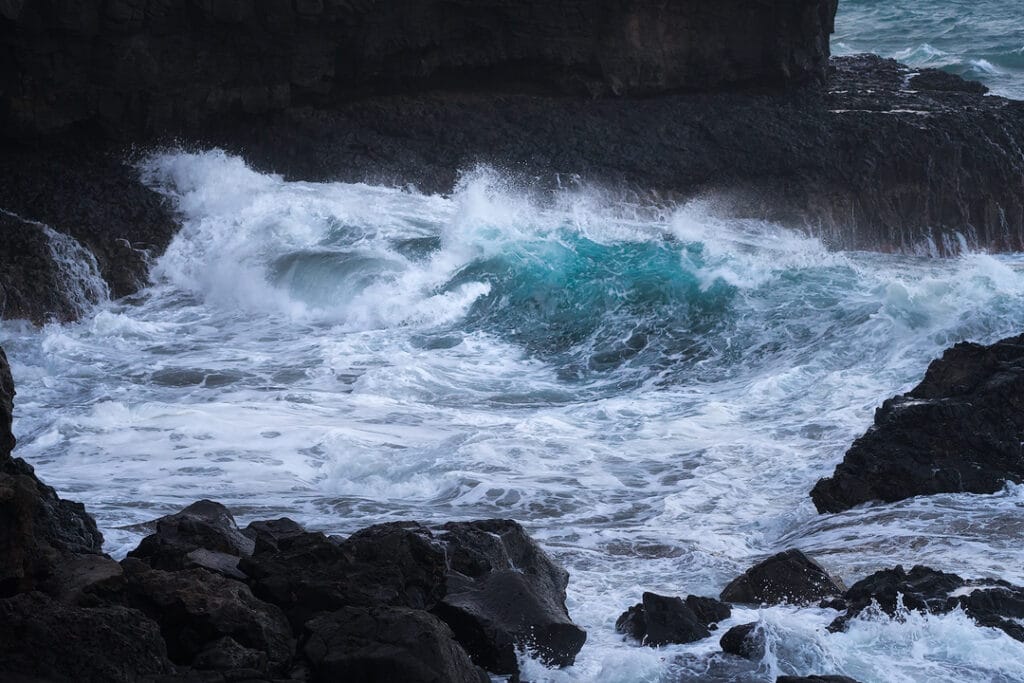
For photographers, the magic is not only the blowhole itself. The whole platform around it is a field of black, textured lava rock with channels where the water pours back to the sea after each wave. Those white rivers of foam over dark rock are what make the foreground.
Where it is and how to get there
El Bufadero sits on the seafront promenade between the beaches of La Garita and Hoya del Pozo, in the municipality of Telde, about 15–20 minutes by car from Las Palmas and around 35 minutes from Maspalomas.
- By car: take the GC-1 and leave at the La Garita / Telde exits (7C coming from Las Palmas, 8 coming from the south), then follow the GC-10 towards Marpequeña / La Garita and the signs for Hoya del Pozo. There is street parking close to the promenade; the blowhole is a short walk from the end of the road.
- By bus: Global line 75 from San Telmo (Las Palmas) runs along the coastal road of Telde; from the stop it is a 10–15 minute walk along the promenade. Check the current timetable on the Global website before you go, especially for sunrise.
- On foot: the promenade runs along the coast between La Garita and Hoya del Pozo, so you can finish the shoot with a walk by the sea and a coffee in La Garita.
When to go: sunrise, tide and swell
Sunrise, always. This coast faces east, so the sun rises directly over the Atlantic in front of you. Arrive at least 45 minutes before sunrise: the blue hour and the first colour in the clouds are often better than the moment the sun appears. Sunset here is pleasant, but the sun sets behind you, over the island.
Tide and swell matter more than the weather. On a flat, calm sea the blowhole barely breathes. It works best with some swell from the east or north-east and the tide rising towards high tide, when the waves reach the cave and the channels fill with water. Local sources disagree on the exact tide, so check a tide and swell app the day before (Windy or any Canary Islands tide table) and plan for a mid-to-high rising tide.
Clouds are your friend. A clear horizon gives a clean sunrise, but a broken layer of cloud, like the morning in my photo, catches the colour and fills the top half of the frame.
The story behind my photo
It was long before dawn when I made my way to El Bufadero. The air was still and cool, and the rocks were wet and slippery. I set up the tripod and spent over an hour adjusting the composition, refining the framing and testing settings, waiting for the moment when the first golden light would touch the horizon and light up the waves.
When the sun finally broke through and the sky caught fire, the water surged over the rocks and poured back through the channels. That was the shot. The final image is a blend of several exposures, so the bright sky and the dark lava both keep their detail.
Camera settings and technique
- Tripod: essential. You will be shooting in low light, and you need the same framing for every exposure if you want to blend them.
- Wide-angle lens: 14–24 mm (full frame) lets you get close to the textured rock and still include the sky. Get low; the foreground channels lead the eye into the sun.
- Shutter speed for the water: around 1/4 s to 1 s turns the water flowing back off the rocks into white trails while keeping some texture. Go faster (1/250 s or more) if you want to freeze the burst of spray from the blowhole itself.
- Time the waves: watch the rhythm for a few minutes before shooting. Start the exposure just as the wave pulls back; that is when the channels look best.
- Exposure blending: when the sun is in the frame, take one exposure for the sky and one or two for the rocks, then blend them in Lightroom or Photoshop. A graduated ND filter is the in-camera alternative.
- Bring a microfibre cloth: the spray reaches the lens more often than you expect. Check the front element between shots.
Safety on the rocks
The blowhole can be seen perfectly from the promenade, and you do not need to go far onto the platform to get a good composition. If you do go down, keep in mind:
- The rock is wet and slippery, especially the darker, smoother areas close to the water.
- Bigger sets of waves arrive without warning. Watch the sea for several minutes before choosing your spot, and never turn your back to it.
- On days with a big swell or coastal warnings, stay on the promenade. No photograph is worth the risk.
- Wear shoes with good grip, and bring a headlamp for the walk in before sunrise.
Take El Bufadero home
If you can’t be there at sunrise, you can still have that moment on your wall. El Bufadero is available as a limited edition fine art print: an edition of only 25, printed on Kodak Professional Lustre paper, signed and numbered, with a certificate of authenticity.
Looking for more places to shoot? Read my guide to landscape photography spots in Gran Canaria, or browse all my fine art prints of the island.